During the steel rolling process, rolling mill bearings are prone to failure. Once the rolling mill bearing fails, the normal operation of the rolling mill will be greatly hindered. On the basis of analyzing the causes of plate and strip rolling mill bearing failures, the author of this topic further explored the main solutions to plate and strip rolling mill bearing failures, hoping to provide some valuable reference for the normal operation of the rolling mill.
Keywords: rolling mill bearing; fault; solution
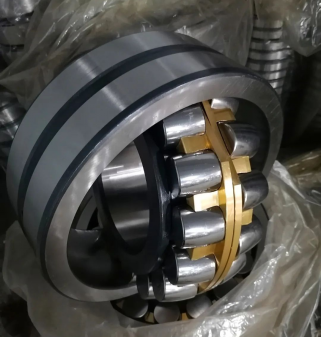
The steel rolling industry includes many mechanical equipment, among which the rolling mill is an important equipment. However, for rolling mill bearings, many faults usually occur during the application process. For example, when a burning fault occurs, the operation of the entire equipment will be greatly threatened. According to the author’s years of practice, there are mainly three types of bearing failures in plate and strip rolling mills, one is the fatigue spalling type, the other is the wear type, and the third is the plastic deformation type. No matter which type it is, it will have a great impact on the normal operation of the plate and strip rolling mill bearings. In view of this, this topic has far-reaching significance to analyze and explore “bearing failures and solutions in plate and strip rolling mills”.
Analysis of causes of bearing failures in plate and strip rolling mills
There are many reasons for bearing failure in plate and strip rolling mills. Common problems include assembly problems, failures in the lubrication system, and influences from the working environment. These reasons will greatly hinder the normal operation of the rolling mill. The specific performance is as follows:
Analysis of problems in assembly
Based on the assembly, if there is an unreasonable assembly, such as an unreasonable assembly between the bearing seat and the roller, it will cause wear and tear and cause the operation to become abnormal. At the same time, if the height of the roll gaps on the left and right sides of the rolling mill is extremely large, or a more serious roll misalignment occurs, further bearing failures will occur. In addition, the interference between the inner hole of the bearing inner sleeve and the roll neck needs to be kept in a moderate state. During operation, if the interference of the roll neck is too small, it will cause the bearing to cause creep failure, which will cause the bearing to malfunction. be damaged.
Failure analysis of lubrication system
Based on the oil and gas flow process, for rolling mills, complete cleaning measures need to be taken at many locations in the operating line, including mixers and joints. If cleaning cannot be completed effectively, a large amount of impurities will be left in various working components, causing blockage in the oil and gas pipes. As a result, if the oil supply is insufficient, the lubrication effect of the system will be threatened, further causing bearing failure.
Analysis of the impact of working environment
Assembly is usually completed in the rolling mill bearing chamber. If insufficient sealing occurs during the assembly process, the lubricating oil will deteriorate, which will further greatly affect the lubrication effect and eventually lead to bearing failure. Moreover, if the bearing chamber cannot be cleaned in time, the service life of the bearing will be greatly reduced, thus greatly increasing the probability of failure. In addition, when the rolling pressure is abnormal, the bearing will be damaged and further cause bearing failure.
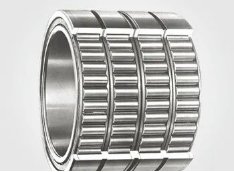
Main solutions to bearing failures in plate and strip rolling mills
In order to maintain long-term and effective normal operation of the rolling mill, it is extremely important to take effective solutions to the faults of the plate and strip rolling mill bearings. Specific measures are as follows:
Ensure the rationality and scientificity of assembly
In order to fully and effectively ensure the rationality and scientificity of assembly, it is necessary to do a good job in all aspects of the assembly process. On the one hand, when assembling the bearing, it is necessary to inspect various accessories at the shaft position, including checking their dimensions and specifications, to ensure that their specifications and dimensions are in compliance with relevant standards. If there is clearance, it needs to be dealt with in time. The treatment needs to be standardized and reasonable, and a reasonable heating method should be selected so that the heating of the bearing can be fully and effectively guaranteed.
Use high-quality lubricants
When choosing bearing lubricants, you need to choose the best quality possible, and you also need to ensure that the lubricant is non-polluting. Regular inspections of the oil circuit should be carried out so that oil cutoff failures can be effectively avoided, and further bearing failures can be effectively avoided. Use special bearing grease as the lubricant of the bearing to ensure the sensitivity of the bearing operation and effectively avoid bearing wear, further avoiding the occurrence of bearing failure.
Carry out inspections on all parts
First, do a good job of inspection before assembly. If it is a new type of bearing, strict inspection of the dimensions and specifications of each component is required so that the bearing can meet the assembly requirements. If it is an old bearing, cleaning measures need to be taken and further strict inspection measures for bearing dimensions are required. Ensure the reasonableness of the bearing clearance to provide a basis for perfect assembly. Secondly, do a good job of inspection during operation. Bearings during operation need to be inspected regularly. Special equipment needs to be applied to the bearings to listen for the presence of impact and friction sounds. If so, timely and effective measures need to be taken. Do a good job in observing the bearing operating environment. In terms of bearing seats, special testing instruments need to be used for regular inspections to see if there are any abnormal conditions, so that timely discovery and timely processing can be done to eliminate the occurrence of bearing failures to the greatest extent. Finally, do a good job of post-disassembly inspection. For the bearings after disassembly, two aspects of work need to be done. One is to thoroughly clean, and the other is to take blow-drying measures. After completing these two tasks, the bearing needs to be strictly inspected to see if there is any damage, such as pitting corrosion and dents. If the damage is serious, timely replacement measures need to be taken. In addition, it is also necessary to take measures to check the clearance. After ensuring that there is no fault, add lubricant to serve as a backup.
Conclusion
Through the exploration of this topic, it is realized that there are many faults in the plate and strip rolling mill bearings. In order to ensure the normal operation of the rolling mill is fully and effectively guaranteed. It is necessary to formulate and implement effective solutions to existing faults. However, this is a relatively systematic work and cannot be accomplished overnight. It needs to be improved in many aspects, such as ensuring the rationality and scientificity of assembly, using high-quality lubricants, and doing a good job of inspecting various parts. The author believes that it is extremely important to do a good job of inspection before assembly, inspection during operation and inspection after disassembly. I believe that by doing the above, plate and strip rolling mill bearing failures will be effectively avoided, further laying a solid foundation for the normal operation of the rolling mill.