The failure phenomenon of short-stress Φ350 rolling mill roll bearings is analyzed. Aiming at its causes, the aspects of roll cooling, bearing sealing, bearing lubrication, rolling mill bracket, cardan shaft vibration, bearing seat structure and bearing assembly were studied and analyzed. Corresponding improvement methods were proposed, which played a good role in improving the failure phenomenon.
Keywords: rolling mill bearing; failure; improvement measures
Introduction
In recent years, in the metallurgical bar wire production industry, short stress line high-stiffness rolling mills have the advantages of low investment, quick results, convenient installation and adjustment, easy operation, less rolling waste, and light weight. It is generally welcomed by steel rolling manufacturers, and the order volume is on the rise. However, rolling mill bearing failure accidents occur frequently, with up to 22 per rolling mill per month. Replacement is difficult and economic losses are large. This article studies and analyzes this failure phenomenon and proposes practical and effective improvement methods.
Characteristics and assembly structure of rolling mill bearings
The rolls of this type of rolling mill use two sets of four-row short cylindrical bearings and one set of deep groove ball bearings. Among them, four-row short cylindrical bearings have long life and large load-bearing capacity, but they can only bear radial force and cannot bear axial force, so double-row deep groove ball bearings are used to bear axial force. The outer ring of the four-row short cylindrical bearing can be freely detached, so that the inner ring can be placed on the roll neck in advance, and the outer ring can be installed into the bearing seat first. Push the bearing seat onto the roll neck to match the inner ring, and the assembly of the bearing seat and the roll becomes a self-assembly of the bearing itself, as shown in Figure 1. The left side of the roll in Figure 1 is the fixed-end bearing assembly. The four-row cylindrical roller bearing bears the main rolling force, and the inner ring and the roll neck adopt an interference fit. The axial fixation of the roll is achieved by deep groove ball bearings, which bear all axial loads and part of the radial loads during rolling.
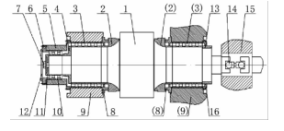
Figure 1 Schematic diagram of traditional roller bearing assembly
1-Roller; 2-Labyrinth ring; 3-Four-row cylindrical roller bearing; 4-Block ring; 5-Outside end cover; 6-Outer ring pressure; 7-Axis locking nut; 8-Inside end cover; 9 -Bearing seat; 10-deep groove ball bearing; 11-inner ring gland; 12-stuff cover; 13-inner ring retaining ring; 14-universal shaft; 15-bracket; 16-outside end cover
The right side of the roll in Figure 1 shows the bearing assembly at the transmission end. There is only one set of four-row cylindrical roller bearings at the transmission end to bear the rolling force during rolling. There is no deep groove ball bearing, and there is no axial locking device between the roll and the bearing seat. At the same time, the internal oil storage space of the four-row cylindrical roller bearing is small. The transmission end retaining ring, half ring and the inner ring of the four-row cylindrical roller bearing adopt clearance fit in the axial direction.
The far right side of Figure 1 shows the cardan shaft and the shaft connecting bracket. The cardan shaft plays the role of connecting the motor reducer and the shaft roller. The shaft connecting bracket is used to hold up the cardan shaft and reduce the vibration of the cardan shaft.
Research and analysis of rolling mill bearing failure
The failure parts of the rolling mill bearings are mainly two sets of four-row cylindrical roller bearings. Among them, the four-row cylindrical roller bearings at the right transmission end are particularly frequent. The accident probability is about 5:1 compared with the left fixed end. The main form of damage in bearing failure accidents is: the relative rotation of the roll neck and the inner ring of the four-row cylindrical roller bearing, causing the roll neck to be damaged or broken. The inner ring, outer ring, and rolling elements of the four-row cylindrical roller bearing are locked, and the rolling elements are embedded in the inner and outer rings; part of the outer ring rotates in the bearing seat, causing damage to the inner and outer end caps on both sides of the outer ring and the inner hole of the bearing seat.
Research and analysis of roll cooling
When the roll is working, its cooling water should take away the heat generated by rolling in time. However, due to various reasons such as unreasonable arrangement of cooling water points, too small cooling water flow, clogged water nozzles, etc., the roll cooling effect is not ideal. This causes the roller bearing to operate at ≥170°C in a local area, and the grease will quickly become liquid. A large amount of lubricating oil will leak out through the seal, and the lubrication conditions will drop sharply, causing the bearing environment temperature to further increase. Rolling mill bearings have been in a high temperature environment for a long time, which not only easily causes the grease in the bearing to dry out quickly and causes bearing failure, but also easily causes bearing fatigue damage and shortens the life of the bearing. Therefore, in rolling mill production, the management of roll water cooling is also the first thing that should be solved to improve bearing failure.
Research and analysis of bearing seals
The roll bearing seat works in an environment with a large amount of cooling water, rolling oil and scale mixture splashing around, and the working conditions of the sealing ring are harsh. Frequent and rapid replacement of rolls can also cause damage to the sealing ring during bearing loading and unloading. After dissecting the used roller bearings, it was found that the lubricant contained a large amount of water, the grease softened and changed color, and some bearings looked like they had been cleaned in water.
Bearing selection analysis
On the basis of maintaining the seals at both ends of the original bearing seat, you can choose bearings with self-sealing. Compared with bearings without sealing rings, bearings with self-sealing rings have the advantages of longer service life, significantly reduced consumption of lubricating grease, and reduced maintenance. The interval can be extended by a certain period, etc.
Analysis of sealing structure improvement
Divide the sealing structure into three parts:
The first part is a non-contact labyrinth seal, with a static labyrinth at the radial bearing end and a moving labyrinth at the roll end. The length of the static labyrinth and moving labyrinth convex rings should be appropriately lengthened to prevent the roll cooling water and iron oxide scale from flowing into the roll bearings.
The second part is two back-to-back skeleton oil seals. The skeleton uses a fluorine rubber skeleton, which is not only low in price, but also can achieve good results when used reasonably. When the rolling mill is in a horizontal state, the lip direction of the shaft sealing ring in the static labyrinth on both sides must be installed toward the outside of the bearing, which can effectively prevent the splashing of cooling water and iron oxide scale; when the rolling mill is in a vertical state, the lip direction of the shaft sealing ring in the static labyrinth on both sides The lip of the sealing ring is installed toward the inside of the bearing, which can effectively prevent lubricating oil from overflowing due to downward gravity; the lip of the sealing ring in the non-drive side labyrinth is also installed toward the outside of the bearing, which can effectively prevent the splashing of cooling water.
The third part is the waterproof cover. A waterproof cover made of nitrile rubber is put on the labyrinth-type sealed static maze and the moving maze. The static waterproof cover is placed on the static maze, and the dynamic waterproof cover is placed on the moving maze. . In this way, the dynamic waterproof sleeve rotates with the moving labyrinth, while the static waterproof sleeve and the static labyrinth remain stationary. During installation, apply oil on the contact surfaces of the dynamic waterproof sleeve and the static waterproof sleeve to prevent the cooling water of the roll and the oxidized iron scale of the rolled piece. Flow into the labyrinth seal.
Bearing lubrication research and analysis
Analysis of grease storage space
Traditional bearing grease storage space is small, mainly relying on the gap between the rolling elements inside the bearing. The outer end cover can be extended outward to increase the oil storage space and extend the service life of grease.
Grease analysis
Since the grease commonly used in bearings is ordinary lithium-based grease, it has the disadvantages of high viscosity, low penetration, and is not resistant to high temperatures and high speeds. After the rolling mill is opened, the bearing grease will dry out and cause heat and jamming. Moreover, it is easy to cause accidents such as abnormal wear and burning of bearings due to grease hardening and failure to lubricate the bearings properly.
In order to reduce costs, some bearings also use domestic roller special grease, which is a urea-based grease and is cheap. By comparing the characteristics of lithium complex grease and urea grease, it can be seen that lithium complex grease is suitable for heavy loads, low speeds, high temperatures, and does not require refueling midway. Urea-based grease is suitable for occasions with high speed, light load and centralized lubrication. The finishing mill of the high-speed bar production line has a heavy load and low rotation speed (up to 1200r/min). The rolling mill is refueled once during assembly and is rolled off the line after rolling for 3 to 7 days. No refueling is required in the middle. See Table 1. At the same time, considering that the oil storage space at the transmission end of the Φ350 rolling mill of the high-speed bar production line is small, the oil storage capacity is small, which also aggravates poor lubrication. Therefore, it is recommended to use extreme pressure lithium complex grease.
| Table 1 Performance comparison of greases | ||||||
| name | Mobility | High temperature resistance | Applicable load | Suitable speed/r·min-1 | Suitable for the occasion | price |
| Ordinary lithium grease | Difference | Difference | Medium, heavy | Less than 1,500 | One-time replenishment | Low |
| Extreme pressure lithium complex grease | Difference | Great | Heavy | Less than 1,500 | One-time replenishment | high |
| Ureyl ester | Great | Difference | light | Expressway(3000) | Centralized refueling or refueling midway | Low |
Dry oil lubrication is used for bearing lubrication. The original manual lubrication method is laborious and time-consuming. If the operator does not have a strong sense of responsibility, it often causes the roller bearing to leak oil, leading to bearing failure. Now it can be changed to automatic centralized lubrication mode, and the effect will be better.
Oil lubrication has a strong cooling effect and can take away dirt and moisture from the bearing. The lubrication methods for roller bearings using oil lubrication include pressure oil lubrication, oil spray lubrication, oil mist lubrication and oil-air lubrication. Pressure oil supply lubrication is the most effective lubrication method for roll bearings under normal speed; oil injection lubrication is to spray lubricating oil into the inside of the bearing through an oil spray nozzle installed on one side of the bearing at a certain pressure for lubrication. Generally used in high-speed roller bearings or situations where pressure oil supply lubrication cannot meet cooling requirements. Spray and oil-air lubrication spray dry compressed air containing oil mist into the inside of the bearing for lubrication. The advantage is that it consumes very little fuel and has a strong cooling effect due to the action of air. It is mainly used for large roll bearings with high rolling speed and high rolling precision, or for roll bearings that are not frequently disassembled in the bearing box.
Research and analysis of vibration of rolling mill bracket and cardan shaft
The bracket and cardan shaft vibrate greatly and the transmission is poor. When the bracket is overheated and swings too much, the rolling mill will generally burn the bearings. At the end of the use of the cardan shaft, the vibration is greater and the roller bearings fail more frequently. In terms of accident probability, the transmission end is much greater than the operating end. It is determined from this that the vibration of the bracket and universal shaft has a greater impact on the rolling mill bearing burning accident. When the roll bearings wear to a certain extent due to vibration, or the clearance and accuracy change, it will cause forced vibration of the rolling mill, thus affecting rolling mill production, safe operation, and product quality. If excessive vibration occurs during production, the operating performance of the rolling mill will decrease or malfunction will occur. Sometimes the surface quality of the product will decrease sharply and chatter marks will appear.
For the bracket, the improvement measures that can be taken are: first, repair the bracket spring balance device to reduce the impact of bracket vibration on the rolling mill. In addition, positioning sleeves and positioning rings are installed in the roll sleeve to improve the smoothness of the transmission, thereby significantly reducing the vibration of the bracket.
For the cardan shaft, the improvement measures that can be taken include: on the one hand, use a dynamically balanced cardan shaft to eliminate the impact of the cardan shaft’s own swing on the transmission of the rolling mill. The dynamic balancing test level reaches level 6.3. On the other hand, there must be strict requirements for the assembly of the universal shaft to ensure assembly accuracy. Therefore, on the one hand, the impact of cardan shaft vibration on the rolling mill can be reduced; on the other hand, the service life of the cardan shaft can be increased and the cost of use can be reduced.
Research and analysis of bearing seat structure and bearing assembly
Structural analysis of bearing seat
The life of the bearing is inseparable from the design of the bearing seat. If the bearing seat is improperly designed and manufactured, it will cause uneven stress on the bearing and reduce the service life of the bearing. The bearing seat should have self-aligning properties to avoid unbalanced loads on the bearing due to burnout and deflection of the rollers. Whether the size, geometry, accuracy level, and tolerance range of bearing-related spare parts are consistent with the design. Whether the smoothness and hardness of the contact surface mating with the bearing are within the specified range, whether all gaps and interference fits meet the design requirements, etc.
Bearing assembly analysis
The use of clearance fit roll bearings is mainly to facilitate the replacement of work rolls. The bearings adopt clearance fit on the journal and in the bearing seat. Depending on the size of the inner diameter, the inner ring fit clearance ranges from 0.05mm to 0.6mm. Due to the loose fit, relative movement will occur between the inner ring of the bearing and the roll neck when the rolling mill is operating. Therefore, in order to prevent wear on the roll neck, there should be certain hardness requirements for the roll neck. In addition, the edges of the inner ring of the bearing will be dented under long-term huge pressure, making it difficult to disassemble and assemble the bearing. Therefore, an annular groove should be machined on the surface of the roll neck at the position corresponding to the spacer ring, and the groove width should be larger than the width of the spacer ring to ensure that the spacer ring will not be stuck in the groove when disassembling the bearing. When the radial clearance of the bearing changes after working for a period of time, it can be adjusted by repairing the spacer ring between the inner rings of the bearing. The positioning of the outer ring of the bearing is achieved by adding or removing the adjusting shim between the gland and the bearing seat. The inner ring of the bearing is pressed tightly by a compression ring, and the compression ring is fixed to the roll neck with a key. The axial position of the compression ring is adjusted by a castle nut. After the castle nut is positioned, use the positioning block to lock it with the half ring to prevent the nut from moving.
Bearing failure improvement
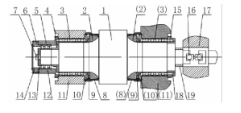
Figure 2 Schematic diagram of improved roller bearing assembly
1-roller; 2-moving labyrinth ring (improved); 3-four-row cylindrical roller bearing; 4-stop ring; 5-outside end cover; 6-outer ring gland; 7-axial locking nut; 8- Waterproof sleeve (improved); 9-skeleton seal (improved); 10-static labyrinth failure (improved); 11-bearing seat; 12-deep groove ball bearing; 13-inner ring gland; 14-stuffing cover (improved); 15-inner ring retaining ring; 16-cardan shaft; 17-bracket; 18-outside end cover (improved); 19-positioning sleeve (improved)
Figure 2 is a schematic diagram of the improved roller bearing assembly. In terms of structure, the roller side of the bearing seat is changed to a dynamic and static labyrinth ring. At the same time, a waterproof sleeve is placed on the labyrinth ring, and a skeleton seal is added between the two labyrinth rings to ensure a good bearing seal. If you want a better sealing effect, you can also choose a self-sealed four-row cylindrical roller bearing. The end caps of the bearing seats on both sides are lengthened to increase the grease storage space and reduce the frequency of oil injection; a positioning sleeve is added to the connection between the journal and the universal shaft to improve transmission smoothness.
In terms of daily management and maintenance, regularly check the water volume of the cooling system, nozzle clogging, etc.; lubricating grease cannot consider short-term interests, and more reliable extreme pressure lithium complex grease needs to be used. The lubrication method should be changed from manual to centralized automatic lubrication. If conditions permit, grease lubrication can be changed to oil lubrication. The manufacturing and assembly of bearing seats must strictly follow the manufacturing and assembly accuracy requirements; bearing assembly must be strictly controlled and must be inspected and cleaned regularly to avoid the growth of impurities inside the bearing; steel rolling operations must be standardized, operating procedures management must be strengthened, and leaks must be checked and filled to prevent problems before they occur.
Conclusion
Based on the research and analysis results, the above-mentioned corresponding improvements were made, and finally, after strengthening management and standardizing operations, the number of rolling mill bearing failures decreased month by month, and the annual cost reduction and maintenance expenses were roughly estimated to be several million yuan.